Vapor Polishing Explained: Why a Sealed Grip Matters
Share
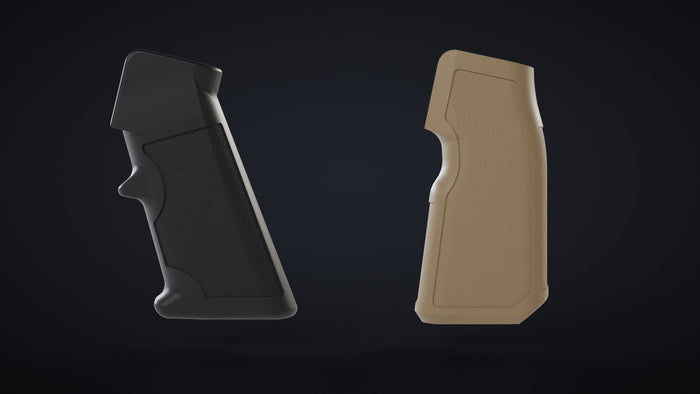
Every Tapp Tactical grip is vapor-polished before it's Cerakoted. It's a step most people never hear about, but it's a big part of why the grip feels refined in the hand. Here's what it does.
The problem with an as-sintered surface
A grip straight out of the sintering process has a matte, slightly porous surface that feels like fine sandpaper. It can hold dirt and oils, and it doesn't give a coating the smooth, consistent base it needs.
What vapor polishing does
Vapor polishing exposes the part to a controlled chemical vapor that briefly softens and reflows the outermost skin of the nylon. As it settles, the peaks smooth out and the surface pores close. The result is a smooth, sealed, very strong finish, with nothing added and nothing sanded away.
Why it matters to you
- It feels refined. No sandy, raw feel in your hand.
- It's sealed. The surface resists absorbing sweat, oils and grime, and wipes clean easily.
- It's a better base for Cerakote. Color goes on evenly over a consistent surface.
- The texture stays. The textured side panels, front strap and backstrap keep their grip; polishing only takes the raw feel off the surface.
Polishing vs coating
Vapor polishing changes the nylon's own surface. Cerakote is a separate thin-film coating that goes on afterwards. Together they give you a smooth, sealed base under a durable color. Read Cerakote on polymer grips for the second half of the story.
See the whole process
From powder to finished grip: what selective laser sintering is, our materials and process page and how grip texture works.
Made to order in the USA. Ships in 3–5 business days. Custom (“Other”) colors can add up to 10 business days.